Reflections

14th June
2012
written by Sue Ozar


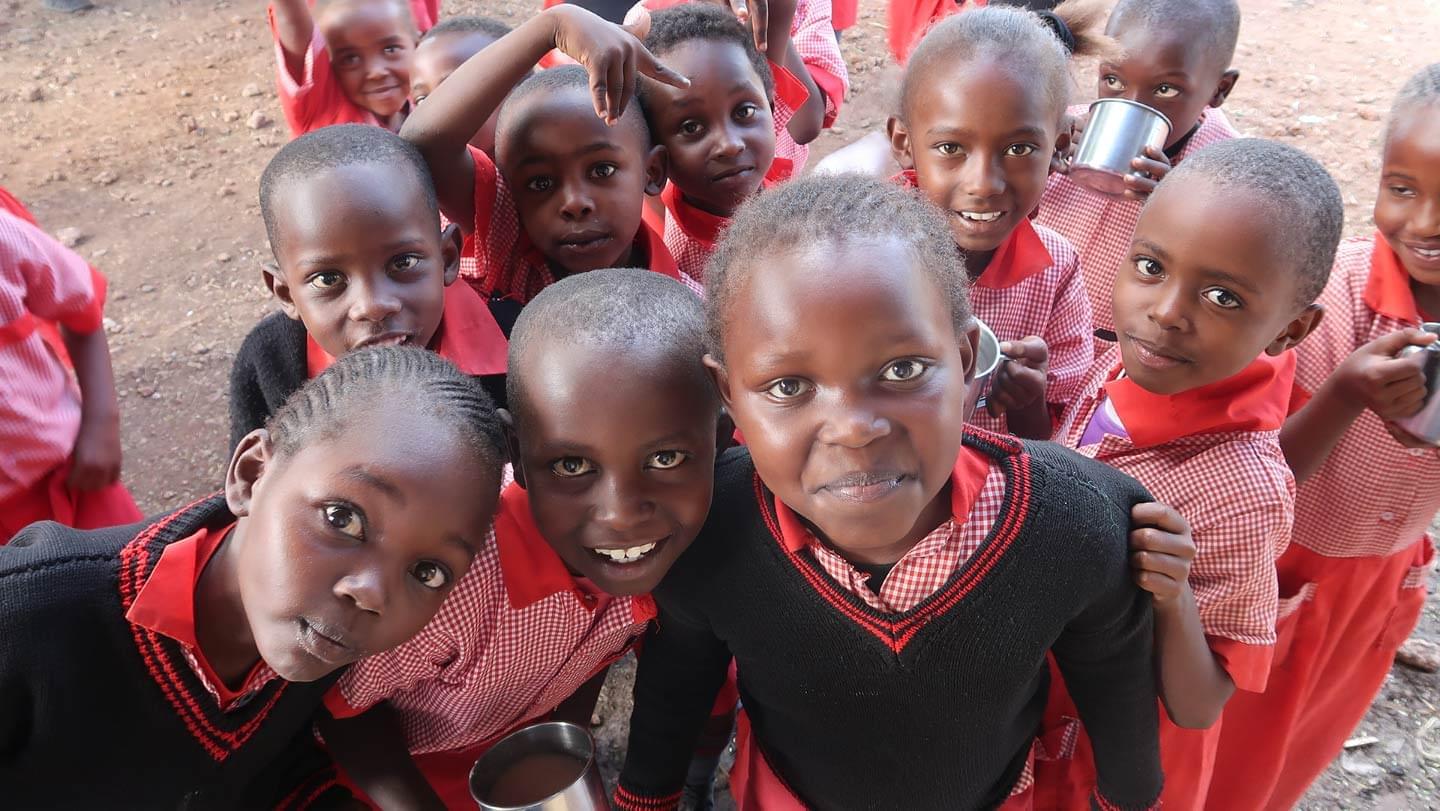
This is the final set of stories from the girls themselves.  St. Clare Centre is home to girls from Meru, a city located in north central Kenya, and Nchiru, a small village near Meru,


Deborah (not her real name) age 14 has been in St Clare for 3 years. She came to St Clare from the Meru area where she was an orphan who lived with her grandmother, who also cared for several of Deborah’s siblings and cousins. “We were very poor so I seldom was able to go to school. Instead I stayed to help Grandmother with the other children by carrying wood and water.  It was hard work. I wanted to go to school, but could not.”  A neighbor who heard of St Clare from Father Riwa persuaded Deborah’s grandmother to allow Deborah to go to live at St Clare. Deborah continues,” I love school where I am learning and sharing ideas with the other girls. This is a loving community. Now I am in class 7 and doing quite well.”      


Ruth (not her real name)is 15 and one of the original students of St Clare. She came in 2006 from Nchiru where she lived with her grandmother. Ruth recalls,” My father died from being poisoned and my mother was sickly so my grandmother tried to care for me. In the beginning we were day students who returned home in the evening. We had no dining room and no classroom, so we ate and studied under the mango tree. I was grateful to be here at St Clare. Now my grandmother wants me to return to the village and be married. I want to stay here where I have my studies, my friends and I am safe.”


10th June
2012
written by Sue Ozar

We continue our 5 part series of St. Clare girls telling their own stories.  Our focus here is on Samburu (home to the Samburu people in north central Kenya) and Machakos (a city of poverty near Nairobi).   


Diana (her name has been changed) age 14 is from Samburu in Northern Kenya. She was orphaned at a very young age so she lived with her grandmother. They were very poor so they had little food and no money for school fees. As is the custom in Samburu, in order to secure a dowry of a few sheep and some sugar,  Grandmother planned for Diana’s marriage. Her aunt intervened, said NO and arranged to bring Diana to St Clare. With great determination Diana continued “After my education at St Clare I want to be a nurse to help other girls BUT not in Samburu. I want to pick my own husband and not be told who to marry.” She concluded,” St Clare has saved my life”         


Nine year old Nancy (not her real name) comes from Machakos, an area south east of Nairobi. Although Nancy has parents and 6 brothers with whom she lived in Machakos, her father brought her to St Clare when she was 7 years old. Nancy NEVER returns to her home area to visit. If she were to go ‘home’ for even a few days Nancy would be forced to beg on the streets for something to eat. Some girls take shelter at St Clare to escape extreme poverty, with Nancy being one of these children. She appears to be exceptionally bright so with the care and good resources of St Clare she now has a chance for a future.      


6th June
2012
written by Sue Ozar

We continue to hear two more stories from girls who left Eldoret in Western Kenya to come to the safety and security of St. Clare Centre.

 Patricia (not her real name), age 12, is from Eldoret in western Kenya. When the post election violence of 2007 broke out, Sarah was told by her parents to stay in the house with her brother as there was fighting and killing happening right outside her home. The two children did as their parents said.  Patricia explained “After that our parents disappeared and I never saw them again. I don’t know remember how it happened, but the next thing I knew I was in a hospital in Nanyuki in eastern Kenya. My grandmother was there. I lived with my grandmother for a few years, but we were so poor that there was no food for us. In 2011 I came to St Clare with some other girls from Eldoret. “  Bernadette reported, “I am doing well here and am very happy at St Clare.”


Bernadette (not her real name) is 15 and from Eldoret in western Kenya. Since her parents died when she was quite young, Bernadette lived with an uncle with whom she was living when the post election violence erupted in 2007. “My uncle and I were forced to move to the ‘tent area’ by the police for safety.  For three years I lived in thiscamp. On many days we had no food. It was dirty and cold and I slept on a mat on the tent floor. I never went to school because school was only for the youngest children. It was a very sad life.” When Bernadette spoke of her life now at St Clare she lit up saying, “Now I am at St Clare where I have a good school, good food, good friends and a wonderful life.”    


27th April
2012
written by admin


Upon returning to New Jersey from Kenya, Andy and Cathy Cahill told their families about their experiences working at the St. Clare Centre.  Cathy is a Nurse Practitioner who works with AIDS children at Newark Beth Israel Medical Center in Newark, New Jersey.  At St. Clare she provided physicals for the girls and health education.


Cathy relates “I can’t get those children out of my mind. I think of them all the time.”  She and Andy told their story which resulted in their siblings all becoming sponsors for a girl at St. Clare.  Through these sponsorships the Cahill influence will continue and have a positive long lasting impact.   

7th April
2012
written by admin

AN EASTER MESSAGE-

As we celebrate this Easter season I am reminded of something a child said: “If I wasn’t here, I would either be a thief or dead.”  That could be said of the 650 all the children who have been rescued.  I know the life of a thief in Kenya is very short. It is clear to me all these beautiful children would probably be dead if the St. Clare Centre did not exist. Hunger, disease or violence would have extinguished their young lives.

My friends, it is also clear to me, these children have been given life by YOU!!!  Your compassion has returned them to life. At this time of the year I remember YOU are the Easter people who have rolled away the rock and allowed these children to escape the tomb of the streets and abuse.  The resurrection continues through YOU.

So on this Easter 2012 I say THANK YOU to all the sponsors and donors. You truly are Easter People.

Gratefully Yours in the Risen Lord,

Fr. Francis Limo Riwa”    

26th March
2012
written by Friends


The Saint Clare Girls’ Center’s Photojournalism class interviewed the founders of Friends of Kenyan Orphans (FOKO), Madam Sue and Mr. Bud Ozar when they were at St. Clare for their annual trip in March 2012.  This is the second part of the interview conducted by the girls.


Christine:            How do you manage to get the money contributed for the building of the school?

Md. Sue:            By writing letters to friends in America, Germany and Singapore.  Sometimes we also bring friends to St. Clare so that they can see how wonderful the girls are. We also ask for help on our web page and by writing articles.

Mr. Bud:            We also give talks in churches so that people may contribute. We spend most of our time traveling around the country to talk about these wonderful girls. As we travel to some schools some students help out. We spend 12 to 14 hours per day and seven days per week on this.

Lydia:         Are there people from your country who support you in this mission? Are there others who don’t believe in your work?

Md. Sue:            Yes, there are many people who support us. Many of them have huge hearts and they are willing to help the poor girls like you children. There are also others who do not believe in the work that we are doing, but the majority are those who believe and support us.

Irene K.:            Do you still have enough time with your families?

Md. Sue:            Oh, yes. We do have time with our families. All we do is to plan to  have time with our families and spend much time with them.  Although they complain that we have paid much more attention to Africa (she laughs). My children say they wish they were small                                     Kenyan children so that more of our attention can be paid to them.   The real thing is that we try our best to have time with them.

Agnes:            How are you planning for every pupil/student at St. Clare in the  future?

Mr. Bud:            We are focusing on completing the building and sponsorship for  every single child’s support. We plan to bring many people with us on our trips here to meet you.

Pauline:            What do you think you might feel when you see girls  succeeding and joining highly qualified universities like Joseph Mutuma did?

Md. Sue:            Probably, I will be very proud, most impressed and a most happy person.

Mr. Bud:            This will make me very happy since Md. Sue and I want you girls to find happiness in life. Joseph Mutuma has really impressed me even the way he conducts himself in the college. I will be very happy to see you girls like Joseph. We are hoping to see all of you in                                       colleges and universities, and be successful women.

 Nancy:            When you come to Kenya to visit the children, what challenges  do you meet? Do you see any change to the children and the school? Or do you find it the same as when you left?

Md. Sue:            It is not a challenge for me to be here. The only thing that I see that is difficult is when many people come to me for help and I cannot give it. And it is very hard to leave you.

Mr. Bud:            We do see a lot of changes in you. You are more organized.  There is a good environment. You are becoming beautiful women and wise ladies.

Both:                        There is wonderful change.

Pauline:            How do you manage to continue helping an institution like St.  Clare when you find some things that are disorganized, like clothes on the floor, dirty pavements/ classes? How do you  tolerate it and manage to make the next visit?

Md. Sue:            Oh! I just ignore this since I understand that the girls are young and  some of them do not know how to take care. We also have families and know this is how little girls are.

Mr. Bud:            There is a great improvement in the cleanliness of the sanitation block, so I understand that you girls are taking care of things and are educating the little girls on how to take care of things.

Mercy:            Since the time you have been at St. Clare and the time you have spent with the girls, how can you describe them?

 Md. Sue:            Words to describe girls at St. Clare are beyond comprehension. But  if I am really urged to describe them, I would say that they are intelligent, open, joyful, hardworking, friendly, affectionate,  welcoming, attentive students and lastly I can describe them as  “special girls”.

Mr. Bud:            The girls at St. Clare really give me hope in my mission. They are  young leaders and missionaries in training. I call them “special girls” also just as the twelve disciples, they were called aside to be  trained so that they can also continue with God’s mission in the                                     future. They are girls of much honor and are full of virtues.

(The girls in the Photojournalism class designed their interview with Madam Sue and Mr. Bud Ozar.  They then conducted the interview, took the photographs and put the interview into words for FOKO’s web page.  Continue your wonderful work, ladies!)

(Pictured below are Purity, Mr. Bud and Mercy and Madam Sue and Ann.)


2nd March
2012
written by Friends

 Many people might be wondering why Kenya has so many idle and jobless people.

First and most important is that many people in Kenya are ignorant. They lack knowledge or facts about a situation that they will encounter in the future.

Kenyan parents are advised by the government to take their children to school, but because of ignorance, they refuse, aiming for their children to get married at an early age will allows the parents to obtain property. The children who are most affected are the girls because in some communities like Maajai and Samburu these young women are forced to marry old men, not young men of their age.

When a girl this young is married, she stays idle at that man’s home because she did not get an education. The man may mistreat her because she cannot go back to her parents once she is married.  The law makes it possible for her to suffer much pain and may even lead to her death.

Second, the young men may study up to the 8th grade and stop schooling, even though parents prefer educating boys to girls.  Boys who shop schooling early get involved with drugs and  alcohol because they see their friends using these. Although the parents stop them, these boys do not listen once they have tasted drugs. They become addicted so that they cannot do anything without drugs. Since they have limited education, these young men live miserable lives.  Instead of working, they are found loitering in the streets or sitting the whole day begging to get money to buy drugs.

Some children may not go to school because their parents are not capable of educating them. So they stay at home idle, doing nothing. When they are grown, they marry jobless people because in Kenya, poor marry the poor and rich marry the rich. Working people do not marry people who are not working and earning a salary.

Despite the talk of children, we are aware also of adults who are very healthy and yet stay idle. They do not like doing work to earn a living. They lack the understanding that not only through education can a they succeed in life, but they can also do manual work and become successful. They have common sense, but do not use it as they often just sit down waiting for the miracles to happen without fighting idleness themselves.

Many men stay idle in the towns the whole day while they have children back home who need their care. They do not think of doing things like irrigation.  Instead they stay idle in town. This idleness is one of the greatest problems we have here in Kenya. If everybody in Kenya would be working and fighting idleness Kenya could develop.

If a person really wants to be successful, he/she must strive to fight laziness and idleness.  Hard work and education both pay.


Ann is a Form II (sophomore) student at St. Clare Girls’ Centre in Nchiru, Kenya

22nd February
2012
written by admin


The Form II girls are the pioneers of St. Clare Girls’ Center.  They have encountered many tribulations in their lives.   I will try to give you a better understanding of their story and mine, for I am one of them.

Father Riwa, a missionary from Tanzania, built St. Francis Children’s Village to help street boys in Kenya. The news of this school spread like wildfire. Many orphaned girls used to go to St. Francis to ask Father if he would sponsor them. St. Francis was only meant for boys and Father would not mix girls with boys, although he had mercy on us girls.  Whenever he saw us, he only thought of how girls who have no parents were being mistreated. This encouraged him to build a girls’ school.

In 2006, Father Riwa built St. Clare Girls’ Center to help orphan girls from different tribes. We were very lucky to be sponsored since many of us lived miserable lives. We came from different backgrounds. Some had gone to school but others had not. When we met here in 2006, we all started with class one work because our Father Riwa believed that “Repetition is the mother of learning.”

The school was not yet well developed in 2006. There were no dormitories, and only a few classrooms. We came to school every morning and returned home in the evening. Our relatives who didn’t like us to study would refuse to take us to school so had to start our journey at 5:00 in the morning to reach school on time. Dangerous wild animals could attack us on our way to school in the morning, but since we were devoted to education we had to persevere. We also had no dinning hall so we used to eat our breakfast and lunch under the trees.

Some girls ran away because of these difficult struggles. They said that they were too big to start in class one. They had no faith that one day everything would fine. After running away from school, some got married had children. They wished to come back to St. Clare, but it was too late. Those of us who remained decided to cope with the situation as we believed what is says in Genesis 3:19, “By the sweat of your brow you shall eat bread till you return to the ground. For out of it you were taken, you are dust, and to dust you shall return.”  We did not lose hope as we were determined to put more effort into our studies. In that one year we covered the work from class one to class four.  As the days went by, we became used to the school. We were provided with everything and we even began to forget the past lives that we lived.

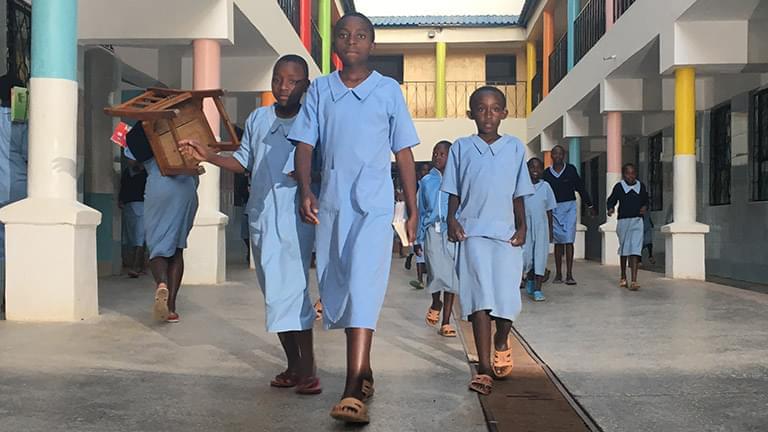
The second year, 2007, the dormitories were built and we started sleeping at school. The dining hall also was built and we stopped eating outside under the trees. We were very happy to be in a comfortable environment. From there we started learning two classes per year. Everyday began with Mass at five o’clock offered by Father Riwa. What a wonderful school where pupils learn, freely guided by the Word of God from the Holy Bible.   The school also developed a lot because of the many friends who provided enough money.

In 2009, we sat for our final exams in primary level. Everyone was surprised when the results came out, as we all had passed with flying colors. Nobody had below three hundred marks out of five hundred. We all made it to secondary level so Father added secondary level at St Clare.  As a result, we did not struggle looking for schools. We worked hard knowing that education favors only the prepared mind. We all said, “YES WE CAN. NO IS NOT AN OPTION”.

Fourteen of us passed the Form One exam and were promoted to Form Two. We refused to look backward but only forward to a bright future where we could become the future leaders of Kenya.   We have different ambitions, which I hope we will attain. We are role models in our school and so we have a big responsibility, which our teachers are helping us achieve!

Purity (bottom row, fourth from the right) is a Form II (sophomore) student at St. Clare Girls’ Center in Nchiru, Kenya.


5th January
2012
written by Sue Ozar

Sister Kathryn, one of the Adrian Dominican sisters, at St. Clare (pictured above with one of the St. Clare girls) offers some wonderful thoughts about the girls at St. Clare.  She says, “They are the heart of this thriving community.  They embody the love and trust that continues to call forth the best that each of us [the four Adrian Dominican sisters] has to offer.  In response to them, Sister Christa counsels individuals, small groups and teachers to work through their pain and troubled spots.  Sister Maurine has drawn from their souls incredible works of art with the simplest of materials and even when they and others think that real art is not possible.  Sister Renee, along with a group, “the garden club,” has created a beautiful and productive shamba (garden) that surrounds our home.  These girls who have endured such suffering, such deprivation and poverty in their lives, have learned to expect nothing, demand nothing, and yet their very presence invites people into their lives even if for just a little while.  They have accepted and loved us, though we are white.  They love in spite of all the abandonment they have faced.  They also have learned to hope and believe that if they can focus, study, get an education, they will be able to make a better life for themselves and for Kenya.  They talk of being the future leaders of Kenya, and it thrills my heart, for I believe that some of them will be just that.”

Pictured from left to right are Sisters Christa, Renee and Maurine. 


2nd January
2012
written by Sue Ozar


The new year presents a new challenge. Since 2004 the focus has been on constructing a building. Now that the building is almost complete, for the first time the focus is on acquiring a sponsor for each child. At this time we have 103 sponsors for 340 girls, presenting us a new challenge for 2012, a challenge we hope you will accept with us.

As we close 2011, we are most grateful to all our donors who have make St. Clare possible.  We are especially grateful to all the wonderful donors who responded to our Famine Relief Fund and provided food for the children at St. Clare.

We enter 2012 with confidence, knowing you are walking this mission with us.

We wish you a year of grace, peace and health.

Bud and Sue Ozar

Previous