Posts Tagged ‘victims’
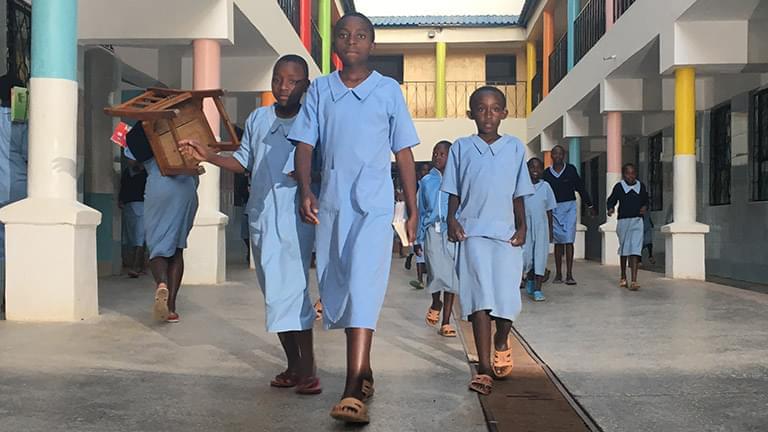
Last week Walsh University in Canton Ohio held a week of activities aimed at heightening global awareness and solidarity with the poor. A highlight of the week was the students took An Uncommon Walk for the Common Good where they wore flip flops or no shoes at all to simulate a connection with people in the developing world. Funds raised during this week were given to Friends of Kenyan Orphans with the specific purpose of purchasing flip-flops for the St Clare girls in Nchiru Kenya.
BREAKING THE CODE OF SILENCE
BY
ANN
I wonder how many people know of the side effects of Female Genital Mutilation (FGM). It has come to my consciousness that I should stand tall and break the code of silence, for this topic is a taboo to some communities.
I had carried a book called “Desert Dawn,” the author is Waris Dirie. This book is actually talking of a girl named Waris who was mutilated at the age of five and later decided to run away at the age of twelve to escape an arranged marriage.
When Waris was only as tall as a goat, her mother held her while an old woman cut off her clitoris and the inner parts of her vagina and sewed the wound closed. The woman left only a tiny matchstick-sized opening for urine and menstrual blood. This Somali girl continually experienced difficulties with urination and menstruation. Her Momma believed this would ensure her future because girls with intact genitals are considered unclean and sexually driven. No mother would consider such a girl a proper wife for her son.
To my surprise the mother of Waris did not intend to have her tortured, rather she thought she was making her a pure woman who would be a good wife and mother and an honor to her family.
The women who do the circumcision use a razor blade or a knife sharpened on a stone for the cutting. If the girl-child bleeds too long they use a paste of myrrh to stop the blood. They cannot treat infection if it occurs because they do not have penicillin or any other antibiotics. During the marriage ceremony the girl really suffers. When a girl is married, the groom tries to force open the bride’s infibulation on the wedding night.
Girls in Somalia suffer the most. It is estimated that two million women have been victims of the ancient tradition, though the roots of the procedure are lost in its great secrecy.
I am also worried that the government is not sufficiently involved in protecting children from injury or abuse. As the government is passing laws against the female cut, it is with the same vigor they should vilify bush circumcision ceremonies and allow boys to be circumcised in hospital. There is no evidence that excruciating pain makes one
a grown-up or that those circumcised in hospital are not “total men”.
It has been noted that many communities use a single knife on as many as 10 boys, thereby posing a major health risk of contracting HIV/AIDS. People need to be taught that there are more hygienic ways of circumcision. As parents, we should not allow a tradition to risk our children’s lives.
This is not a call to ban circumcision of boys as a practice. It is only a call against the inhuman methods used. It is also a call to end the era of traditional surgeons. Surgery is an important field and should not be left to the village quacks. We have
doctors and that is their work. That is the reason the weather forecast is not read by rainmakers.
I want to heal women who still undergo this painful experience. I won’t be an enemy to the communities who are engaged in the practice. I will work with them through education to eradicate this practice completely. However, it is very difficult to get people to even talk about it. I kindly request that you join me to eliminate FEMALE GENITAL MUTILATION.
Ann is a Form II (sophomore) student at St. Clare.
Sr. Kathryn Cliatt, OP is one of the four sisters at St. Clare. She wrote this account.
“Two other girls were brought down from Samburu from the Masan tribe by women in an organization called “One more day for a Child”. This organization was started by a Czech woman and is run locally by Kenyan women. They rescue abused, neglected and endangered girls. The girls they brought, interestingly, both named Evelyn, are tall slender and have beautiful elegant features. They are both 12 years of age; one has been married for two years andone for seven months. They were married to very old men who were beating them because they were not yet pregnant. Both have been circumcised, another horrendous experience. So the girls ran away and the brave women from this organization rescued them, took them to doctors for physicals, obtained the meds for infections and brought them to St. Clare Center.
The first day the girls looked terrified. Neither could speak English nor even Kiswahili. Fortunately there are teachers in the school who speak the Samburu language and could communicate somewhat. I saw them again a week later when I was sitting in one of the first grade classes where they had been placed for initial learning and they both looked at me several times during class with big smiles. They clearly feel safe and cared-for. Slowly they are learning English.”
The Children’s Village is at full capacity but there are still hundreds of children living on the streets. Each week Fr. Riwa attempts to give them one “good” meal. This meal usually consists of bread and a carton of milk.
Fr. Riwa will tell one of the children the time and location of the feeding. It is usually late at night otherwise, due to the poverty in Kenya, many who are not street children would show up just to get some food.
Hundreds of orphaned street children show up and the process is amazingly orderly. When Fr. Riwa arrives he leads them in a grace before meals and then asks them all to sit down in rows and he distributes the food one at a time.
One volunteer said, “This is an incredible experience. I will never forget this moment.” Another volunteer noted, “I am surprised I am not afraid surrounded by all these street children, but with Fr. Riwa here, it is so peaceful and orderly.”
These are the stories of young sisters from the Samburu tribe in Northern Kenya who follow an ancient tradition of marrying off young girls for a small dowry. The older 11 year told this story.
“A man came to my house bearing sugar. My parents agreed to give me in marriage to this older man for three cows. The house was being readied for marriage and I saw a cow being prepared for the wedding feast. I already knew a girl in the village who was married, was caned and abused so I was frightened and knew I did not want to go through with marriage. When I told my mother this she helped me leave home. I was connected with some people who brought me to St. Clare. I have clothes and food here and I feel safe.”
Here 9 year old sister wrote:
“I was told I was to be married at the same time as my sister .Together we went to the river to plot how we could run away. We told our mother who helped us when our father was not there. I do not know who I was supposed to marry. We have been gone from home for about a month. At St. Clare is the first time I wear trousers and go to class.”

We are often asked if the Children’s Village receives any support from the Government of Kenya. The answer is always “NO” because the country of Kenya is wrapped in poverty on every level and does not have resources to address so many needs.
In fact the opposite is the case. The government looks to the Fr. Riwa for his help. Attached is a recent request from the Republic of Kenya: Ministry of Gender, Children and Social Development. We have blocked the names of the mother and children to protect their privacy. The District Children’s Officer writes about one little orphaned girl named Mary.
“THE CHLID IS AN ORPHAN AND IS IN DIRE NEED OF CARE AND PROTECTION. I AM KINDLY REQUESTING YOU TO EXTEND YOUR KINDNESS BY SPONSORING THE ABOVE CHILD AT THE ST. CLARE GIRLS CENTRE.”
Of course, Fr. Riwa said “Yes” and Mary now has a home at the Chlidren’s Village and 340 new sisters.
When the children come to the St. Clare Centre during the first few months they are asked to write “their story’ so the staff and faculty will have a better understanding of the trauma they faced in their journey to the safety of St. Clare. Here is one girl’s story.
“My father died of HIV/AIDS when I was born. My mother died when I was three months old and my aunt took me to the city to live where they treated me like a maid. I was called “AIDS” because of my parents. I used to cry but my cries disappeared into the air. I decided to sneak off. On the streets my stomach was talking because of hunger; I slept under trees and near garbage. I had to beg money to get food.
One day a simple man passed by so I threw something in his face so that he would stop and give me money. ‘God loves you, my dear!’ were the first words from his mouth! His name was rather Francis Limo Riwa. He took me to his school where to my surprise they gave me bread and porridge. I had never had a wonderful meal like that one. In the future I want to be a judge to find justice for the orphans and the poor like me.”
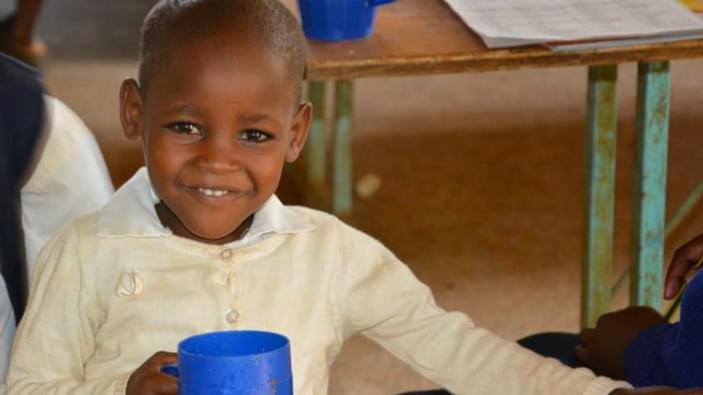
At St. Clare there are 340 stories very similar to this. Each child has her own amazing story of survival on the streets and her path to St. Clare. Every story is a miracle. Every child is a gift.
The Children’s Village in Kenya
The streets of Kenya are littered with thousands of orphaned children, the silent victims of the extreme poverty and HIV/AIDS pandemic ravaging Kenya.
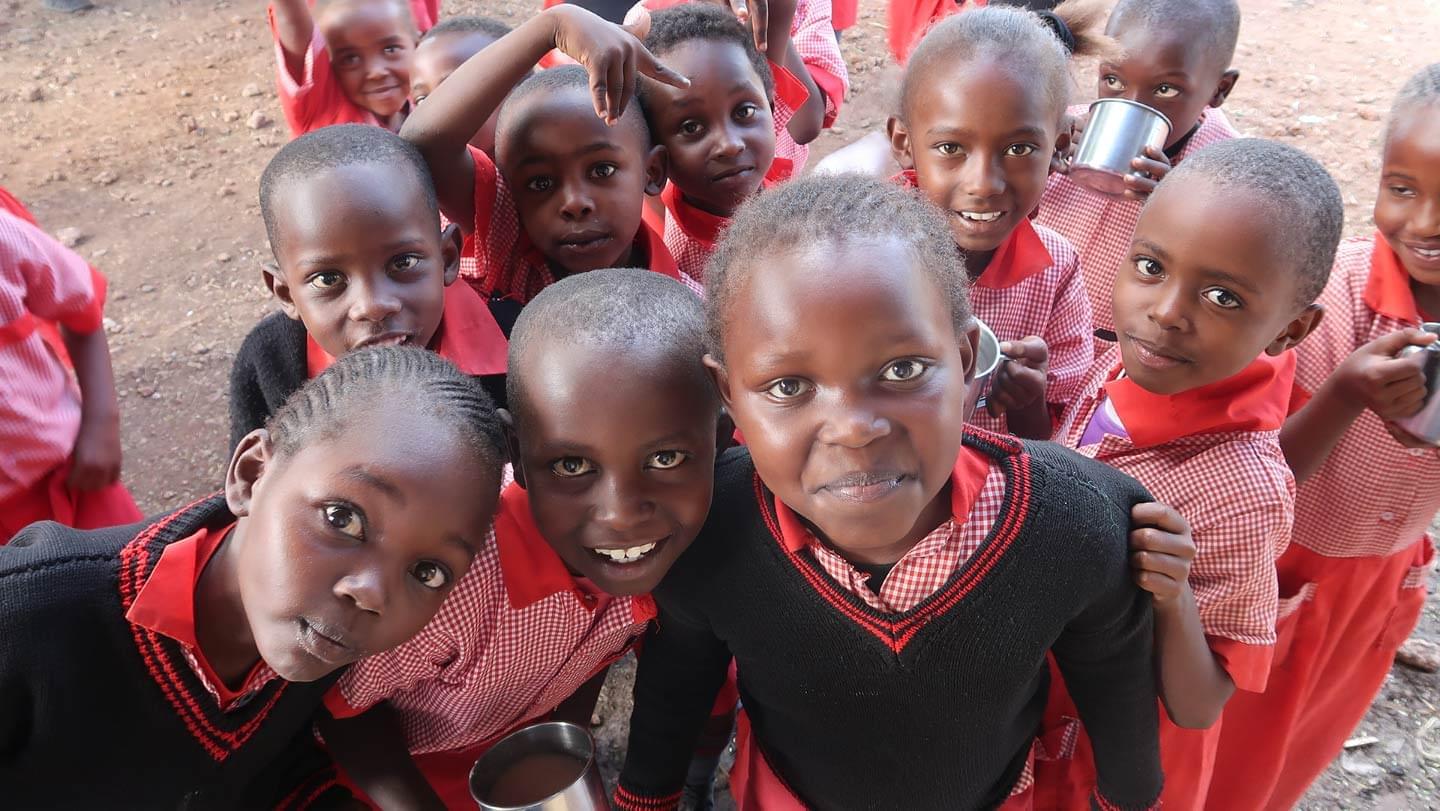
The Children’s Village is the inspiration of Fr. Francis Limo Riwa who in 1999 began to rescue orphaned and abandoned children from the streets. Today it is home, family and school to more than 600 children, living on two campuses: the St. Clare Girls’ Centre and the St. Francis Home for Boys.
The Children’s Village and the survival of these children depend on the generosity of people like you. You are in a unique position to help. Please consider joining us and lending support.
![Marsik[2]](http://www.friendsofkenyanorphans.org/wp-content/uploads/2011/01/Marsik2-300x168.jpg)