Posts Tagged ‘Education’
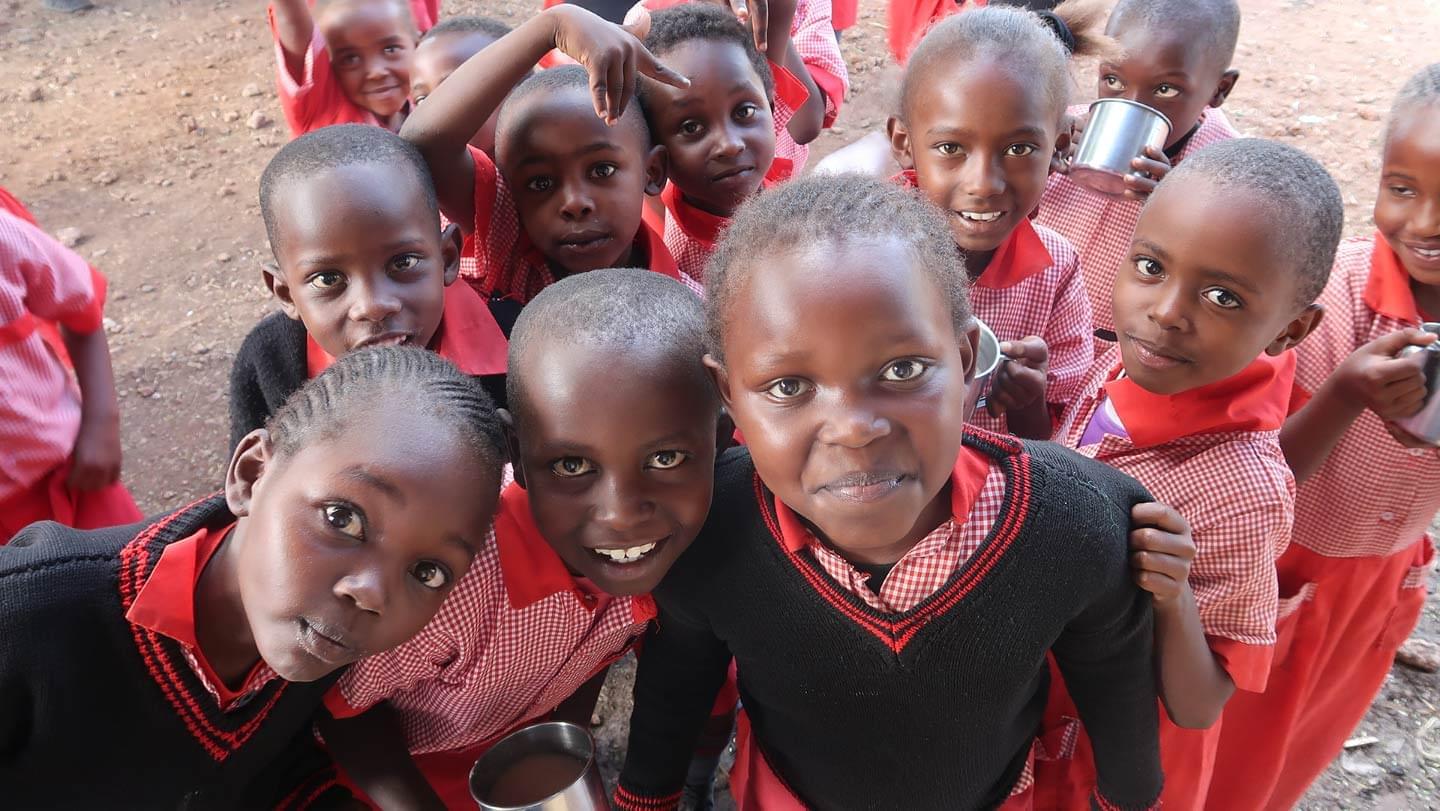
St Mary School in Charlotte, MI, is a small school with a huge heart!
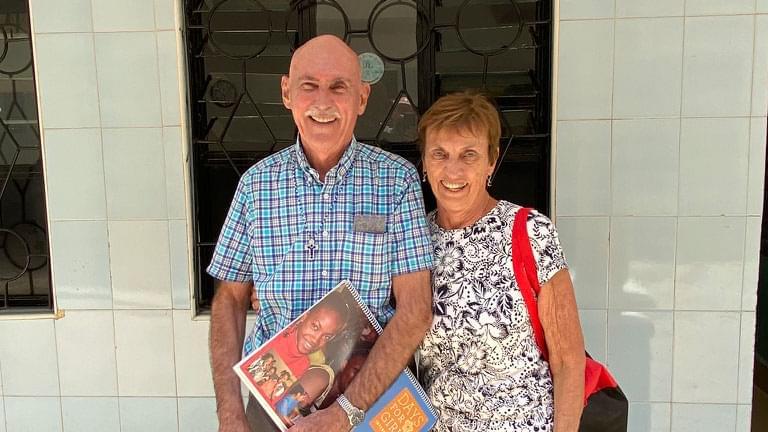
When Kathy Partlow visited St Mary’s to share stories and pictures of St Clare with the student body of 64 students, they immediately caught her spirit and were determined to raise enough funds for a sponsorship. Naming their campaign KICKING IT FOR KENYA they began. Through “Dress down Days”, sales of school supplies and novelties (pictured below) they raised the initial $460. An enterprising young 3rd grader then, set on reaching the school goal, asked her parents to contribute the final $40.
Congratulation to students, staff, teachers, administrators and parents alike.
Indeed St. Mary School in Charlotte, MI is a small school with a huge heart!
(St. Clare Centre for Girls is based upon four pillars. Purity Karenga describes the pillar of education in her essay.)
Education is light and light is bright which means that education brings brightness. Without education in this developing world, you are limiting yourself. In Kenya, education is a basic need.
The education at St. Clare Centre for Girls is unequalled. St. Clare is different from other schools. When St. Clare began, some looked down on our school thinking that it could not succeed. However, through God, it did succeed. The students began learning under the trees outside since the school building was not completed. This was not conducive for learning. Teachers had to dictate notes to us since no appropriate places existed for blackboards. We found it difficult, but since we had determination and the belief that education is the key to success, we persevered.
As the days went by, the school accepted more students who were really in need of education. The director brought different teachers from different backgrounds to teach us. We really enjoyed our education since many of us could now read as well as write. With time, our school curriculum was enhanced. Our teachers are devoted and working very hard together with the administration and the Sisters to educate us spiritually, morally, emotionally, physically and psychologically. In addition to learning in the classroom, extra curricular activities have been added. We have different clubs to join and in which to participate ranging from movement to drama to music to scouting to environmental studies to journalism. We also have football (soccer), volleyball, netball, handball and badminton.
Kenya has begun to develop. Education has brought us many new and foreign things. Scholars and scientists are discovering new things and this happens because of education. Our teachers always tell us that successful people are not super human but are ordinary people with extra ordinary persistence and determination to pursue their education.
The girls of St. Clare believe in this and are very determined to achieve their goals. We follow these educational role models who are so optimistic about life. As St. Clare students, we have dreams that we want to make into realities. There is only one way we will become nurses, doctors, lawyers, engineers, architects, neurosurgeons and teachers. That was is EDUCATION!
Education exists in civilizations all over the world. During the colonization of African countries by European Whites, the formal European style of education was introduced. There are two types of education I Kenya, informal and formal. Informal education is the type, which was done, in the ancestral days, while formal is the type we now have in schools. Kenya uses the 844 system, which means 8 years of primary education, 4 years of secondary education and 4 years of university education.
A school’s administration employs teachers who are specialized in many and different subjects. These teachers have different methods of passing on knowledge to their students, including using textbooks. This all depends on the methods taught to the teacher at the university. Those who have good teaching methods make it advantageous for the students they teach.
Today, computers are used in areas such as weather forecasting, process control in industries, and even guiding spacecraft to the moon. In addition, they are used in book and newspaper printing, in diagnosing diseases, in looking for obscure documents in archives and other things. Travel agents can know whether a seat on a plane or a bed in a room is available. Truly computers are also part of education.
We do appreciate the presence of the western educational system for it has improved the standards of living in Kenya today. Students need to remember that education is the key to success and they need to take it seriously for a better future.
Many people might be wondering why Kenya has so many idle and jobless people.
First and most important is that many people in Kenya are ignorant. They lack knowledge or facts about a situation that they will encounter in the future.
Kenyan parents are advised by the government to take their children to school, but because of ignorance, they refuse, aiming for their children to get married at an early age will allows the parents to obtain property. The children who are most affected are the girls because in some communities like Maajai and Samburu these young women are forced to marry old men, not young men of their age.
When a girl this young is married, she stays idle at that man’s home because she did not get an education. The man may mistreat her because she cannot go back to her parents once she is married. The law makes it possible for her to suffer much pain and may even lead to her death.
Second, the young men may study up to the 8th grade and stop schooling, even though parents prefer educating boys to girls. Boys who shop schooling early get involved with drugs and alcohol because they see their friends using these. Although the parents stop them, these boys do not listen once they have tasted drugs. They become addicted so that they cannot do anything without drugs. Since they have limited education, these young men live miserable lives. Instead of working, they are found loitering in the streets or sitting the whole day begging to get money to buy drugs.
Some children may not go to school because their parents are not capable of educating them. So they stay at home idle, doing nothing. When they are grown, they marry jobless people because in Kenya, poor marry the poor and rich marry the rich. Working people do not marry people who are not working and earning a salary.
Despite the talk of children, we are aware also of adults who are very healthy and yet stay idle. They do not like doing work to earn a living. They lack the understanding that not only through education can a they succeed in life, but they can also do manual work and become successful. They have common sense, but do not use it as they often just sit down waiting for the miracles to happen without fighting idleness themselves.
Many men stay idle in the towns the whole day while they have children back home who need their care. They do not think of doing things like irrigation. Instead they stay idle in town. This idleness is one of the greatest problems we have here in Kenya. If everybody in Kenya would be working and fighting idleness Kenya could develop.
If a person really wants to be successful, he/she must strive to fight laziness and idleness. Hard work and education both pay.
Ann is a Form II (sophomore) student at St. Clare Girls’ Centre in Nchiru, Kenya
The Form II girls are the pioneers of St. Clare Girls’ Center. They have encountered many tribulations in their lives. I will try to give you a better understanding of their story and mine, for I am one of them.
Father Riwa, a missionary from Tanzania, built St. Francis Children’s Village to help street boys in Kenya. The news of this school spread like wildfire. Many orphaned girls used to go to St. Francis to ask Father if he would sponsor them. St. Francis was only meant for boys and Father would not mix girls with boys, although he had mercy on us girls. Whenever he saw us, he only thought of how girls who have no parents were being mistreated. This encouraged him to build a girls’ school.
In 2006, Father Riwa built St. Clare Girls’ Center to help orphan girls from different tribes. We were very lucky to be sponsored since many of us lived miserable lives. We came from different backgrounds. Some had gone to school but others had not. When we met here in 2006, we all started with class one work because our Father Riwa believed that “Repetition is the mother of learning.”
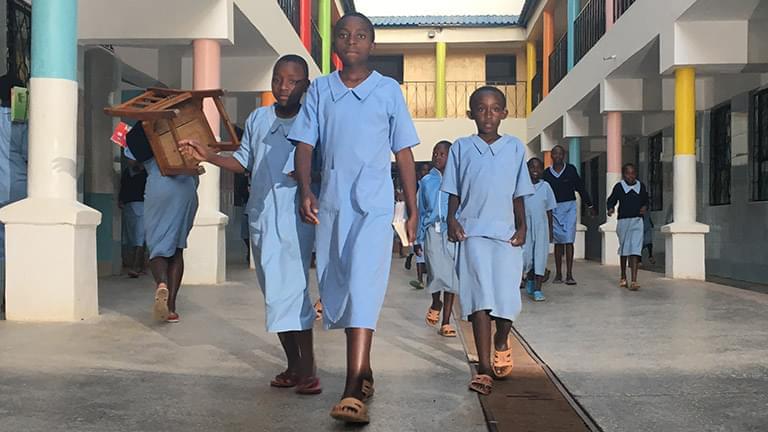
The school was not yet well developed in 2006. There were no dormitories, and only a few classrooms. We came to school every morning and returned home in the evening. Our relatives who didn’t like us to study would refuse to take us to school so had to start our journey at 5:00 in the morning to reach school on time. Dangerous wild animals could attack us on our way to school in the morning, but since we were devoted to education we had to persevere. We also had no dinning hall so we used to eat our breakfast and lunch under the trees.
Some girls ran away because of these difficult struggles. They said that they were too big to start in class one. They had no faith that one day everything would fine. After running away from school, some got married had children. They wished to come back to St. Clare, but it was too late. Those of us who remained decided to cope with the situation as we believed what is says in Genesis 3:19, “By the sweat of your brow you shall eat bread till you return to the ground. For out of it you were taken, you are dust, and to dust you shall return.” We did not lose hope as we were determined to put more effort into our studies. In that one year we covered the work from class one to class four. As the days went by, we became used to the school. We were provided with everything and we even began to forget the past lives that we lived.
The second year, 2007, the dormitories were built and we started sleeping at school. The dining hall also was built and we stopped eating outside under the trees. We were very happy to be in a comfortable environment. From there we started learning two classes per year. Everyday began with Mass at five o’clock offered by Father Riwa. What a wonderful school where pupils learn, freely guided by the Word of God from the Holy Bible. The school also developed a lot because of the many friends who provided enough money.
In 2009, we sat for our final exams in primary level. Everyone was surprised when the results came out, as we all had passed with flying colors. Nobody had below three hundred marks out of five hundred. We all made it to secondary level so Father added secondary level at St Clare. As a result, we did not struggle looking for schools. We worked hard knowing that education favors only the prepared mind. We all said, “YES WE CAN. NO IS NOT AN OPTION”.
Fourteen of us passed the Form One exam and were promoted to Form Two. We refused to look backward but only forward to a bright future where we could become the future leaders of Kenya. We have different ambitions, which I hope we will attain. We are role models in our school and so we have a big responsibility, which our teachers are helping us achieve!
Purity (bottom row, fourth from the right) is a Form II (sophomore) student at St. Clare Girls’ Center in Nchiru, Kenya.
Seneca Middle School 6th grade students from Macomb, Michigan are preparing to support Tabitha a student at St Clare for yet another year.
In mid November, Sue Ozar addressed all 460 sixth graders who, before the presentations even concluded, were planning how they would secure the funds to send to Kenya for Tabitha.
Congratulations to the students and staff of Seneca Middle School for their incredibly generous spirit. You are awesome!
Pictured here is teacher Karen Lizza with one group of sixth graders and student leaders ready to go door to door for donations. 

Each year Bud when Sue Ozar return to Kenya, they bring a small group of volunteers who work at the Children’s Village and lend their experience, expertise, skills and talents to the children and staff. Rounding out the group going in February of 2012 are Chris Miller (on the left) and her daughter Kathryn Miller Borio. Chris is a veteran early childhood teacher in Fraser, Michigan and Kathryn is a speech therapist working in a medical facility in Chicago. Together they will team up and teach the “little ones” at St. Clare Girls’ Centre along with introducing new methods to the present Kenyan teachers.
Mr. Zumba is a very busy man throughout the year, but especially at Christmas. Mr. Zumba, the music teacher at St. Clare, works hard teaching music to his students. Mr. Zumba also wrote the St. Clare anthem, which the girls sing each day and has been at St. Clare for some time, perhaps the longest. However, Mr. Z also doubles as the choir director of the parish choir at St. Rita, which is made up of students from St. Clare and St. Francis as well as parishioners from the village of Nchiru.
This is just another way in which the St. Clare staff give to the community of Nchiru.
In the picture, Mr. Z is pulling out all the stops, giving it his best by combining dance and song, extremely important parts of African culture.
The children in the Children’s Village in Nchiru have a multitude of abilities, including wonderful musical talents. The boys from St. Francis and the girls from St. Clare learned to sing and dance as very small children and these young people are great! Several of the children have become involved with the parish choir at St.Rita in Nchiru. These children are giving back their talents to the community and also interacting with folks from the local Nchiru village community.
Being with their own peers everyday is fine, but joining the parish choir is proving these children a chance to be with other adults and youth. It is clearly a WIN-WIN situation. 
In the photos, the choir members from St. Francis and St. Clare are interspersed with the adult choir members. The children are wearing their white uniform shirts as they clearly contribute to the musical celebration.
Mr. Peter Githae wears many hats. When the previous principal, Madam Edna, departed unexpectedly due to medical reasons, Mr. Githae became the new principal. As the new principal at St. Clare, he is also considered the head master and head teacher.
Mr. Githae did not have to travel far for he was the principal at St. Francis, the boys’ facility just a half mile down the road. He had served for two years at St. Francis. Fr. Riwa wanted someone experienced at St. Clare so he asked Mr. Githae to move down the road.
The big challenge Mr. Githae will face is the retention of teachers. In Kenya, people take a job were they can find one and for most people it can be hundreds of miles from their families. This is true for teachers also. In addition, because St. Clare is always in session, the teachers at St. Clare have only one break a year for two weeks at Christmas time. So Mr. Githae and the sisters are working diligently at strategies to retain quality teachers.